We spent 10 weeks in central Italy working our tails off for a professional chef, living on the local economy, visiting off-the-beaten-track cultural and culinary venues, and realizing our dream. In Part 1 we discussed how we met Chef Lorenzo Polegri and established ourselves in the village of Baschi in the central Italian province of Umbria. Come along as we explore the world of Casale Polegri and Chef Lorenzo, “The Farmer Chef.”
The Kitchen
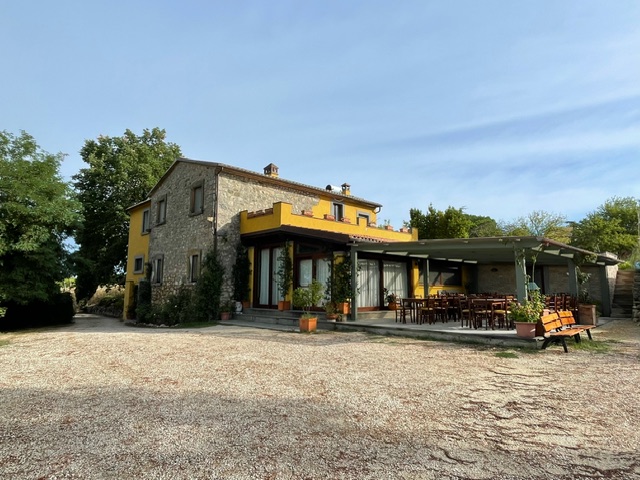
adjoining commercial-style kitchen and a patio dining area.
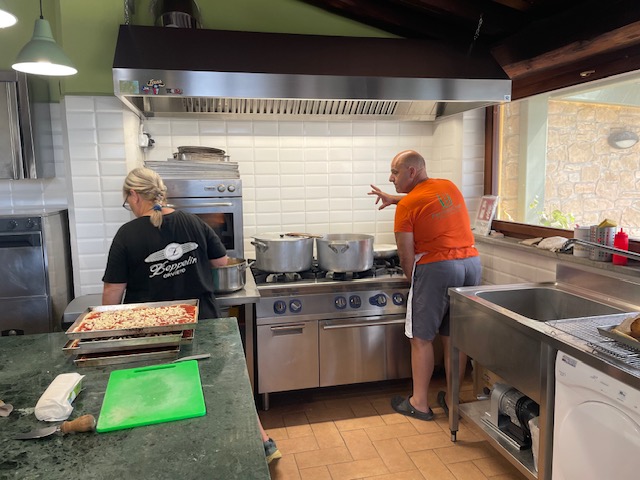
Casale Polegri’s purpose-made kitchen includes all the modern commercial tools and fixtures that allow a half dozen cooks and assistants to work efficiently. There is space for up to 50 guests to dine indoors; or, as we did during the beautiful fall weather, we could move tables under the pinon trees with a magnificent view of Monte Cimino.
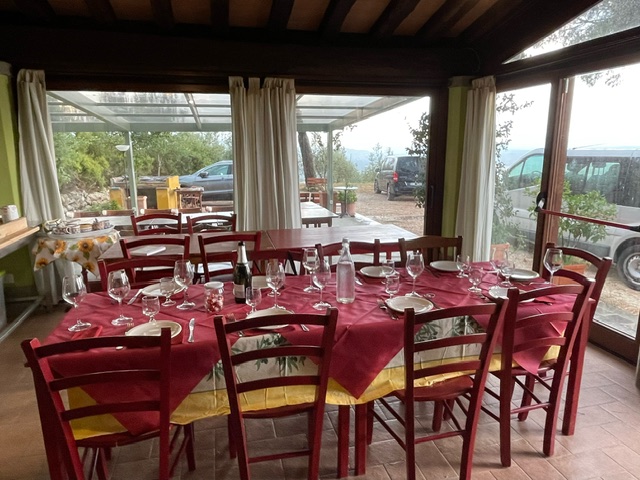
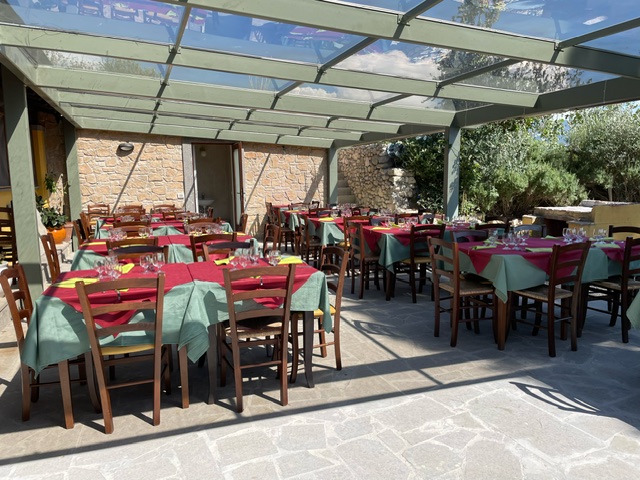
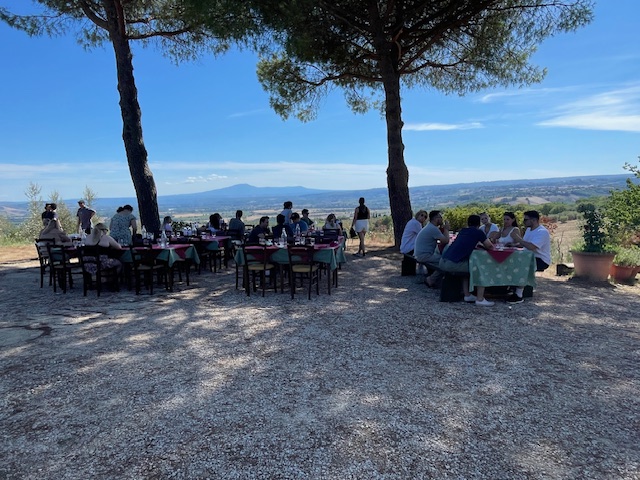
We worked in this idyllic setting for 12-13 hours per day, six days a week. Chef Lorenzo’s usual clientele includes groups of 20 to 25, mostly American, tourists delivered by tour bus, often twice a day. Their visit includes a tour of the olive trees and vineyard and a four-course meal of Central Italian dishes prepared with fresh, local ingredients purchased from local grocery stores or traveling food markets, or gathered from Casa Segreta’s own garden, and prepared based on Chef Lorenzo’s family recipes.
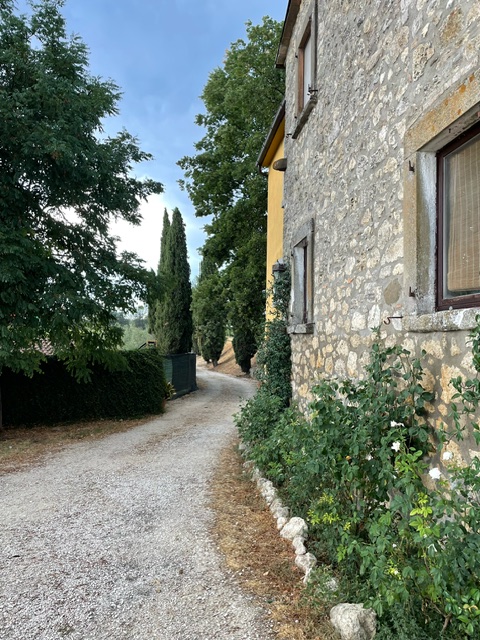
In addition to us, in our roles as assistant chefs, Lorenzo employed a rotating group of four young women from the community. While we focused primarily on food preparation, we assisted with the dining room set-up, plating and serving of food and wine, and the never-ending kitchen clean-up. At the end of the day, we all bussed tables and washed dishes. As military veterans, it was impossible for us to stand around while there was work to be done. Our participation in the less glamourous non-cooking tasks was appreciated and enabled Lorenzo to finish his daily paperwork and all of us to leave a bit earlier. Neither of us have great depth in the Italian language; so we constantly traded language lessons with the staff and quickly homed in on the requisite kitchen Italian swear words – a necessity in any busy kitchen and a true sign of our blossoming friendships.
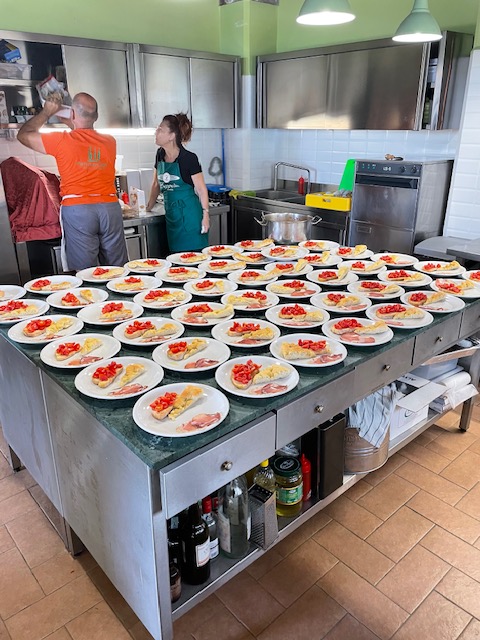
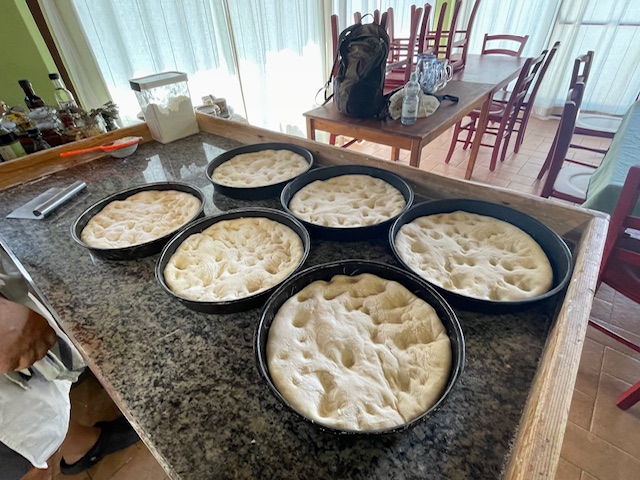
During our first week at Casale Polegri, we were closely supervised by Chef Lorenzo as he demonstrated kitchen operations and taught us his grandmother’s recipes. Although the recipes are in Chef Lorenzo’s cookbook, we took notes as we prepared each dish since our ingredients frequently varied with availability. Did the dish have a different name if we used pork loin instead of pork cheek? No; but, we were not yet comfortable knowing when substitutions were okay. We learned to move fast and carefully with the food prep work. Chef’s instructions were immersive and our learning, hands-on; we needed to be independent sous chefs as quickly as possible. We learned to schedule backwards – we needed bread dough so our pizzas and focaccia would be ready at 1pm? Then, preparing the dough, letting it rest, rise and bake took about two hours, so bread dough must be started no later than 1030. Scheduling oven usage also took coordination.
As you can see in the picture with Caren, there’s an oven in front of her in which we could stack five pizza or focaccia pans to bake. The larger oven below the gas cooktop was more difficult to use for bread because the temperature was harder to control – that oven was better for roasting potatoes. The flow and preparation lessons are obvious to anyone familiar with working in a busy kitchen – coordination and timing are essential. Producing similar dishes every day, sometimes twice a day, gave us plenty of practice. On days when we hosted two tour groups in a day, we prepped twice as many basic ingredients (diced onions, carrots and tomatoes) in the morning. We started the sauces and bread dough preparations for the second sitting during the serving of the first group. The challenge became remembering whether you were coming or going and not forgetting what was in the oven while we prepped for the next go-around. We had a few moments of Chef – asking “Who’s got the roasted potatoes?” — whoops….
Personal and kitchen sanitation, proper knife technique, stove and appliance operation were demonstrated and practiced until Chef Lorenzo was sure we could handle tasks with minimal supervision. In addition to the kitchen, we were introduced to Lorenzo’s extensive vegetable and herb gardens. For the first two weeks we repeated recipes for tour groups with little variance as we honed our skills and rotated through preparation stations for breads, antipasti, pasta sauce, a meat dish and desserts. As we settled in, we developed specialties. Caren prepared the breads and antipasti, and I focused on sauces for pasta, meat main courses and accompanying vegetables. Later on, Chef Lorenzo allowed us to modify basic recipes by adding available ingredients. This gave us both a sense of great accomplishment and satisfaction that we had earned Chef’s trust.
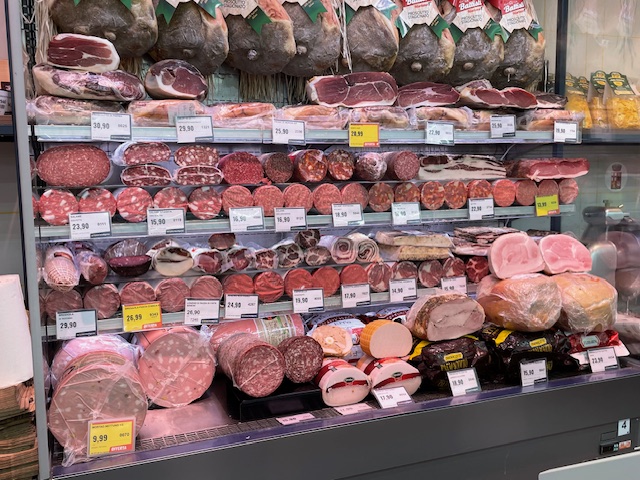
A bonus with arriving at Casa Segreta in the late summer was the abundance of fresh vegetables, fruits, meats, and, of course, cheese. Throughout September, the local produce bounty gave us many options – as we collected our ingredients for the next couple of days, the local grocery stores became a valuable schoolhouse as we asked about new vegetables and made suggestions on dishes. Understandably, Chef was a busy man and his run to the grocery store was like watching a game show contestant with only 5 minutes to fill the shopping cart. We rarely left the store without at least two overflowing carts. Our standard grocery store had a well-stocked meat counter run by Lorenzo’s high school classmate as the butcher. The butcher knew what cuts Chef was looking for and always seemed to have the right cut tucked away. Separate cases were full of pork, beef, chicken, and salumi. The cheese section was mesmerizing; and, of course the grocery store had fresh bread – which we rarely bought since that was mostly Caren’s job. Not only was the sheer amount and variety of fresh food a pleasant surprise but so were the prices which were noticeably lower than what we pay for at home.
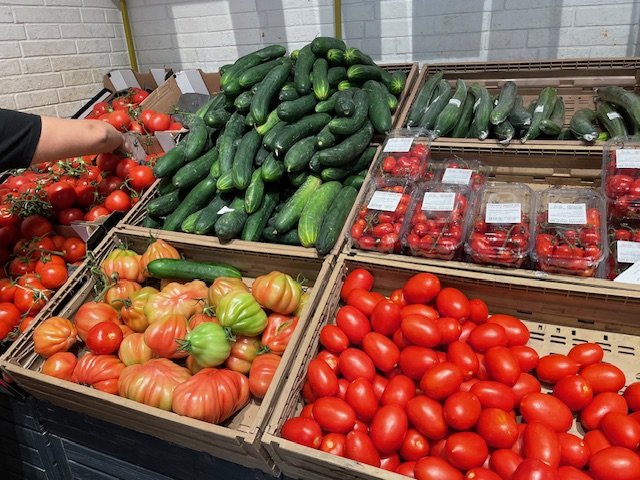
Once a week we met early and traveled to Piazza del Popolo, a square in Orvieto, for the weekly market. Each town and village hosted a traveling market with purpose-built trucks and vans that opened, transformer-like, into meat, seafood, nut, cheese or vegetable stores. Individual farmers and small-plot producers also brought mushrooms, truffles, dairy products, honey, and other farmers’ market treasures. From these harvest safaris we built menus and modified basic dishes using the freshest delicious ingredients available.
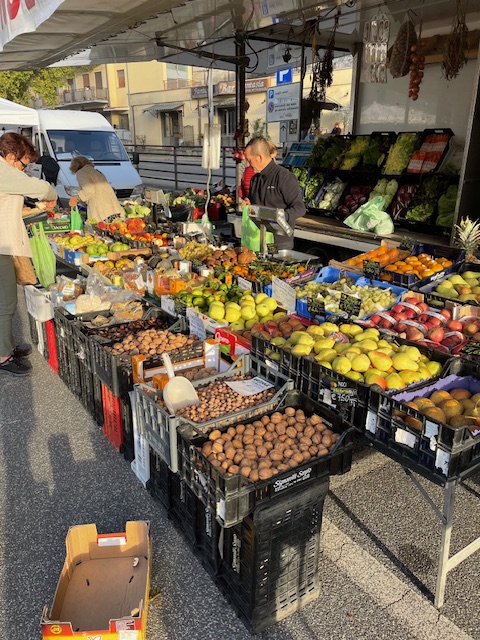
weekly market in Orvieto
The Meals.
As guests arrived, walking down Lorenzo’s long driveway from their bus, Mike walked out to meet them with a “How ya’ll doin?” This invariably caused confusion as American tourists tried to figure out why they were being met in the middle of Italy by an aproned “Italian” cook with a Texas accent. Caren once got asked in the middle of the meal “How’d you learn to speak English so well?” We assured them that, while the prep cook’s hands were American, the recipes, techniques, ingredients and close supervision were strictly Umbrian.
Chef Lorenzo’s traditional four course meals consisted of an antipasti tasting plate with at least six locally sourced items changing daily depending on ingredient availability:
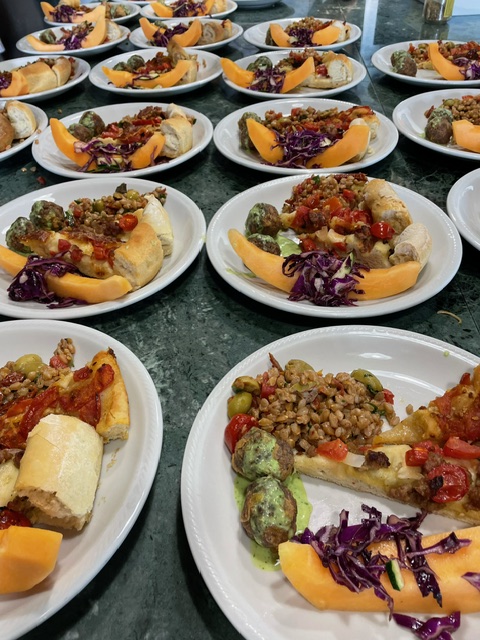
A pasta plate with made-before-your-eyes pasta with vegetable or meat sauce;
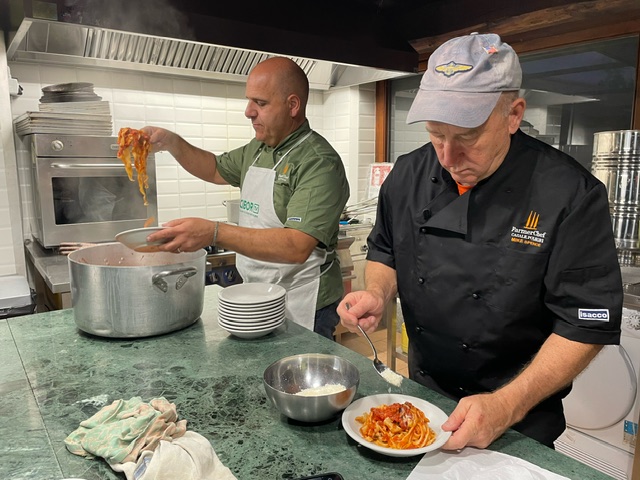
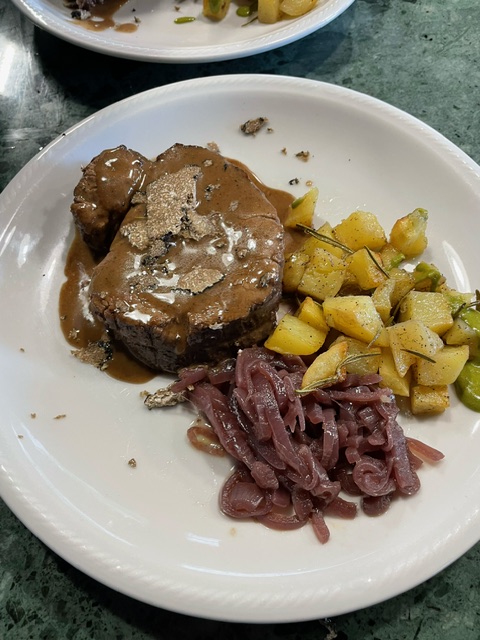
Beef or pork along with roasted and sauteed vegetables as the main course;
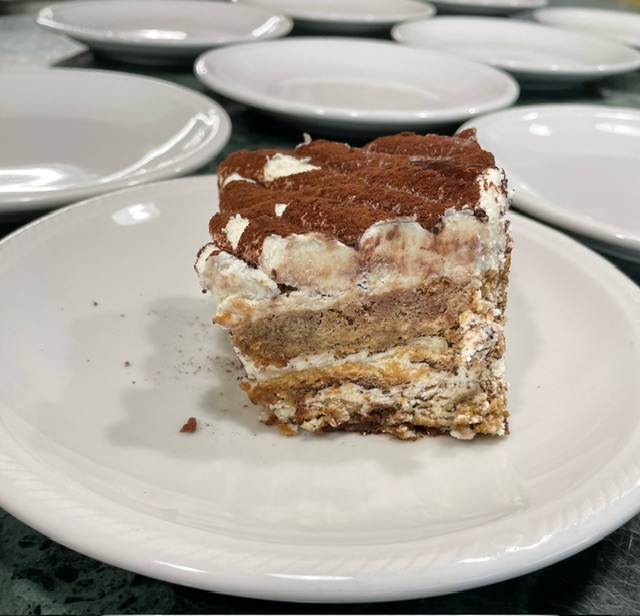
and dessert.
The Magic of Fresh Pasta
A highlight of the meal was Chef Lorenzo’s pasta demonstration on a marble slab in front of the guests. He starts by piling one kilogram (2.2 lbs) of “00” flour in the center of the marble. A bowl is formed inside the pile of flour to hold the liquid lake of eleven beautiful fresh eggs, with yolks of the most amazing orange color. After adding salt and olive oil, the flour is hand-worked into a dough ball. Lorenzo uses a meter long dowel to rollout the dough, eventually, into a 1/16 inch thick, tablecloth-sized, sheet of pasta.
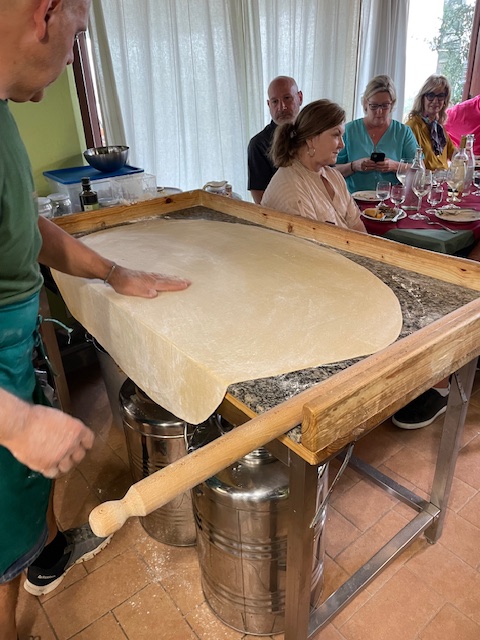
Additional flour is thrown sparingly on the board and the dough to prevent sticking. Two sides of the dough are then rolled inward towards each other so the end product resembles a four-foot long scroll. All of this is accomplished by Lorenzo’s expert hands while drinking wine and entertaining diners with a constant banter of jokes, pasta facts, and cooking stories. Each major pause in the process is marked by a raised glass and the Chef’s cheer of “Saluti!” reminding the guests this is a fun labor of love amongst friends.
After explaining the differences between four thicknesses of flat pasta, tagliolini, tagliatelle, fettucine (emphatically pronounced “fe-tu-chee-nAY”) and papparadelle, several volunteers are invited to the table and, with Lorenzo’s instruction, slice the pasta in their favorite widths. After several cuts, ribbons of pasta are raised on the knife back to the delight of the crowd and deposited in piles. Once all the pasta is sliced, Lorenzo carries the pasta to the kitchen and slides it into a large kettle of salted boiling water. Four minutes later, the perfectly “al dente” noodles are scooped from the boiling water directly into Mike’s pot of simmering sauce. The coarse texture of the fresh pasta permits liquids, both cooking water and, later, sauce, to adhere to the pasta. The starchy water clinging to the pasta is a secret to creating a creamier sauce. Chef’s smile and a quiet “Buono!” are all we need to hear to know we have treated his family’s recipes with respect.
Lorenzo’s dedication to local Etruscan traditions was no more evident than in his limited use of garlic. One of our first questions was why local recipes did not use more garlic? Chef explained that garlic use was primarily associated with Southern Italian cooking, and it just was not as available or used as much north of Rome. On the other hand, black truffles were plentiful, including being dug from Casa Segreta’s fertile soil. We used this culinary luxury – shaved, grated, baked, and fresh truffle in a number of dishes. Finally, everything gets doused with a liberal drizzle of fresh, extra-virgin olive oil rendered from Lorenzo’s own olives.
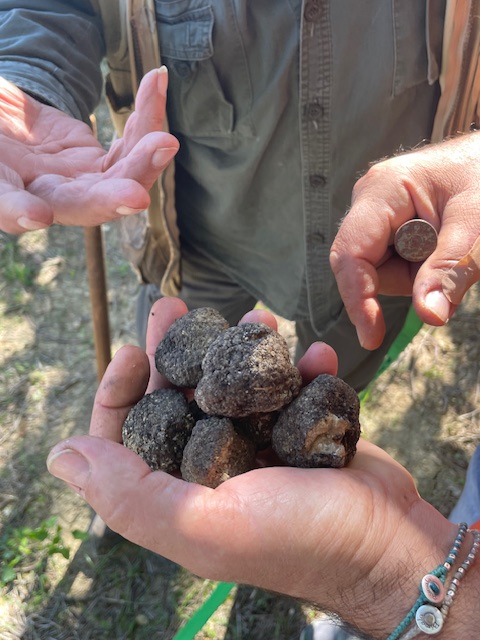
of Casa Segreta,
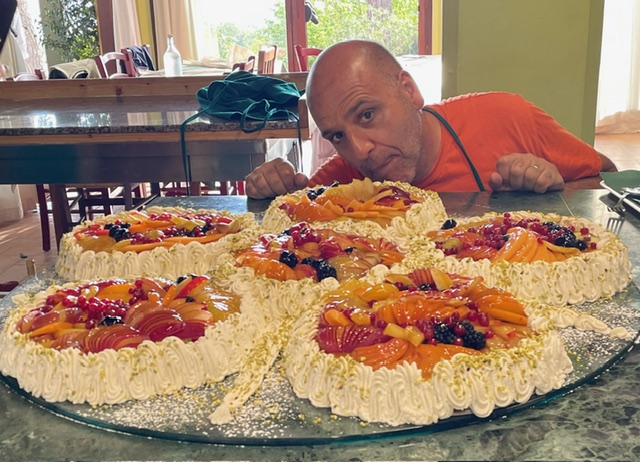
In addition to the standard “Country Meal” for tourist groups, we prepared specialty recipes for large local groups and parties. These menus included pasta with cinghiale (wild boar) ragu, “snail” bread, fried squash blossoms, porchetta, cheesy cauliflower soup and an elaborate multi-layer, whipped cream icing cake known as Zuppa Inglese. Another specialty dessert “torta”, pictured below, included a scratch-made shortbread base layered with lemon pudding filling and sponge cake, topped with glazed seasonal fresh fruit and surrounded by fresh whipped cream and crushed pistachios.
First You Make a Roux
On several special occasions we produced the best lasagna we had ever experienced. In addition to the freshest Italian ingredients, Umbrian lasagna is layered with béchamel, a fluffy roux made of butter, flour, salt, pepper, and milk to which we added grated Parmigiano Reggiano cheese. Béchamel is the binding layer used in Umbrian lasagna – where the usual American-version uses ricotta. Along with mozzarella, and flat pasta sheets, the resulting multilayer masterpiece was thinner and creamier than its typical American counterpart. As an aside, when we got back to the States, we visited a friend in Reno, Nevada and offered to make lasagna for his family. We found a small Italian market with authentic ingredients. The owners were recent emigres from Italy and we told them what we were doing and where we had learned the recipes and techniques. When Mike mentioned that we would be making a lasagna using béchamel, the woman owner rushed over to hug him and exclaimed “Don’t you dare use ricotta!”
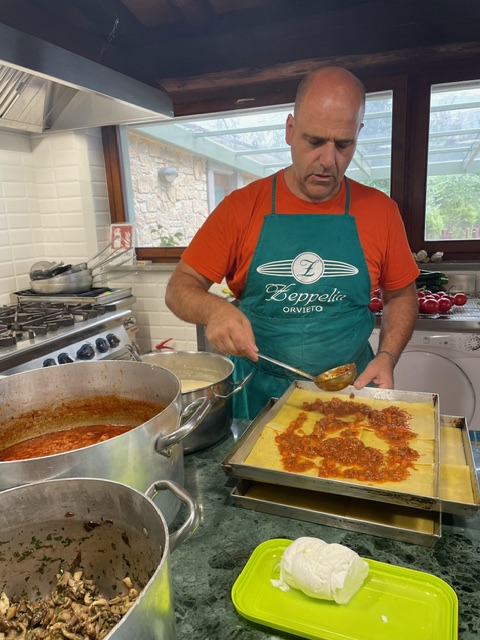
Béchamel for Lasagna
- 200 grams Butter
- All-purpose Flour
- Salt and Pepper
- 1.5 liters Whole Milk, heated until it begins to steam
- Salt and Pepper
- Parmesan Cheese, grated
Note: We used metric measurements for ingredients. In some cases, such as flour for Béchamel, we didn’t measure. We added flour until we got the consistency we were looking for. In another example, when making pasta, because eggs come in different sizes, we were told to “add as much flour as the eggs require.” Such is the art of Italian cooking. Seasonings without measurements are “to taste” so start with a “pinch”.
- Melt butter in a sauce pan over medium-low heat.
- Whisk in flour, a little at a time, until lumps dissolve and mixture starts to thicken. Continue to cook mixture for 2-3 minutes as color starts to darken slightly.
- Slowly whisk in heated milk in increments giving the ingredients time to blend.
- Simmer until slightly thick and creamy stirring occasionally with a wooden spoon. Whisk out any lumps.
- Turn off heat. Set aside. Whisk in salt, pepper, and parmesan.
Béchamel can be made ahead of time, especially if you need to practice. If making ahead, stop the simmer as the mixture starts to thicken and only add the salt and pepper. Once it returns to temperature during the reheat, add parmesan cheese and continue simmering until the cheese is melted.
Note: Classic French béchamel recipes call for a pinch of nutmeg. We did not use nutmeg for the Umbrian recipe.
What you should have at the end of this process is a creamy, off-white-to-golden-colored sauce that can be easily poured and spread as a thin layer on top of the lasagna’s bolognaise-type meat sauce. This recipe should provide enough sauce for three layers.
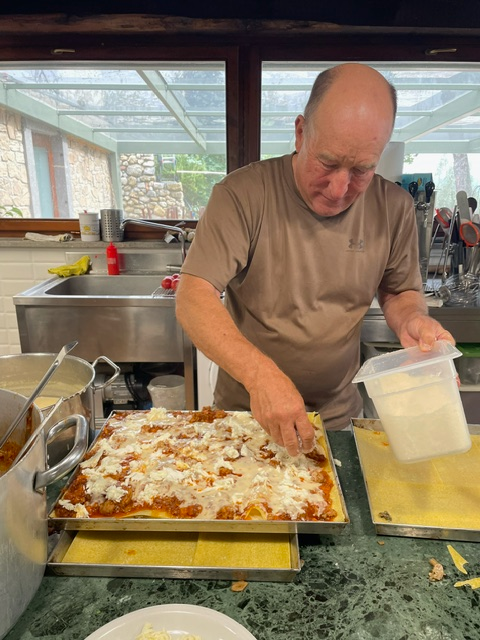
in an inch-high backing pan.
Next: Part 3 – Our Daily Routine and Adventures Beyond the Kitchen
For additional information on Chef Lorenzo, his family and their farm, and cooking class opportunities at Casa Segreta visit: en.casalepolegri.com.This site also includes a shop where you can purchase wine and 100% Italian extra-virgin olive oil, both made from produce grown on Casa Segreta. The shop also sells cherry liquor from the Orvieto area and Chef Lorenzo’s own locally crafted balsamic condiment reduction and spice mixture.

 CMAdventures
Leave a reply to kolbiniemeyer2000 Cancel reply