Enjoy one of the foundation recipes we made and served on a daily basis.
We spent 10 weeks in central Italy working our tails off for a professional chef, living on the local economy, visiting off-the-beaten-track cultural and culinary venues, and living our dream. Our kitchen experiences are related in “Our Umbrian Culinary Adventure.” One of the basic recipes our mentor, Chef Lorenzo Polegri, taught us and we practiced almost every day was an Umbrian-style tomato sauce. Come along and explore the world of Casale Polegri and Chef Lorenzo, “The Farmer Chef.”
The Italian Trinity
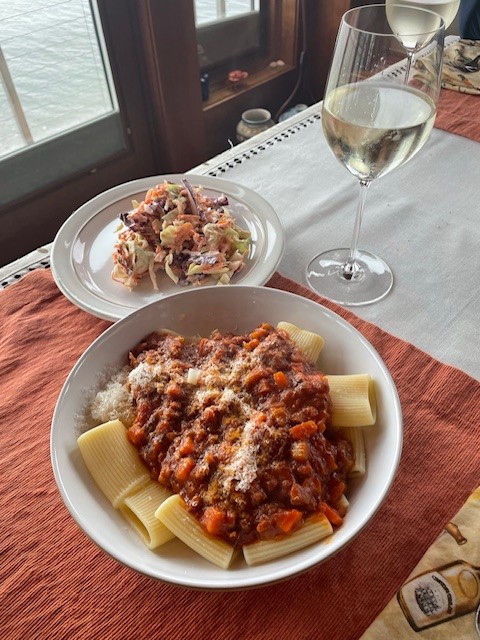
This recipe we call “Pasta Sauce” because that is where we used it most often. However, this sauce is the basis for multiple Umbrian creations including soups, lasagna, eggplant parmigiana, and various meat ragouts and stews. As a pasta sauce we typically made it meatless to ensure guests with a vegetarian preference could enjoy our daily dish. Ground or shredded meat can be added to create a sauce in the Bolognaise-style.
The heart of the Umbrian sauce is a “mirepoix” of onions, celery, and carrots. Mirepoix is a French term for the combination of diced vegetables softened in fat, in our case we used olive oil. Many forms of mirepoix exist across the world of cooking. Our initial exposure to mirepoix was the Cajun “Trinity” – diced onion, celery and green bell pepper sautéed in oil or butter. In Umbria we quickly termed the foundation of our daily cooking the Italian Trinity.
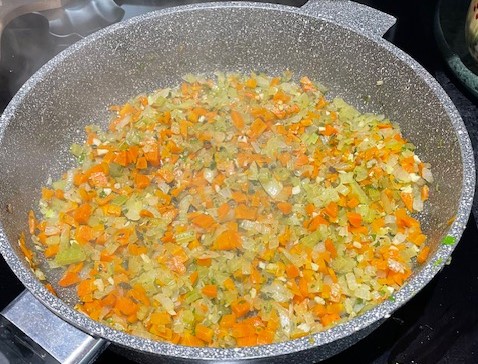
The inclusion of carrots in this Italian combination adds a sweetness missing from trinities containing peppers or other vegetables. We began every day in Lorenzo’s kitchen by dicing mounds of onions, celery and carrots to have on hand for a variety of dishes. The following recipe will serve as a basis for any dinner you may be creating.
Ingredients
Serves 6
1 Medium Onion diced
2 Celery Stalks diced
2 Carrots diced
2 Garlic Cloves finely diced – Umbrian country cooking uses garlic sparingly. Traditionally, garlic was not as available in central and northern Italy. Heavy garlic usage is more a facet of southern Italian cooking.
2 Tbsp Extra Virgin Olive Oil – There is only one version of olive oil used in Casale Polegri cooking – 100% Italian, Extra Virgin. It is worth cautioning that many commercial sources advertise olive oil under a variety of terms. Careful reading of labels is warranted. Labels in the U.S. are required to include the olive’s country of origin. As most olive oils sold in the U.S. are a blend, many simply provide a long list of Mediterranean countries from Greece to Morocco. Those labeled “Italian” may only mean that olives from some or all of these countries were ”processed” in Italy. There is nothing inherently wrong with these products. If you desire an oil made only from Italian olives it must say “100% Italian” and “Extra Virgin Olive Oil” is the only style we recommend using. We used oil processed locally from olives grown and harvested on Casa Segreta, Chef Lorenzo’s family’s farm.
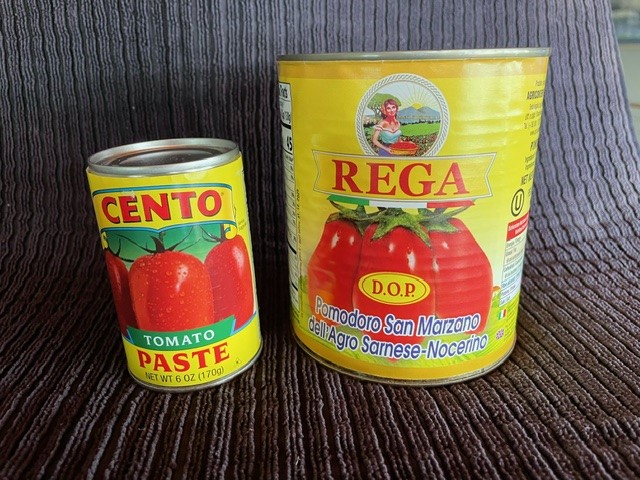
170g (6oz) Tomato Paste – Canned Italian tomato products are widely available and recommended. Most Italian tomatoes are grown in the country’s southern regions. San Marzano from Campagna is the most famous where rich volcanic soil and warm temperatures combine to produce a rich, sweet, less acidic fruit.
1 cup Dry White Wine – For sauces including beef or pork, Red Wine can be used.
800g (28oz) Tomato Sauce
Pinch Salt, Pepper, and Pepper Flakes
Making the Sauce
Sauté onions, celery, and carrots in olive oil over low-medium heat until “the onions scream.” This is a blunt Umbrian way of describing how to cook the combination until the onions start to brown. Stir regularly. If vegetables begin to stick to the pan, add more olive oil. If making this recipe Bolognaise-style, add ground or shredded meat as the onions begin to soften.
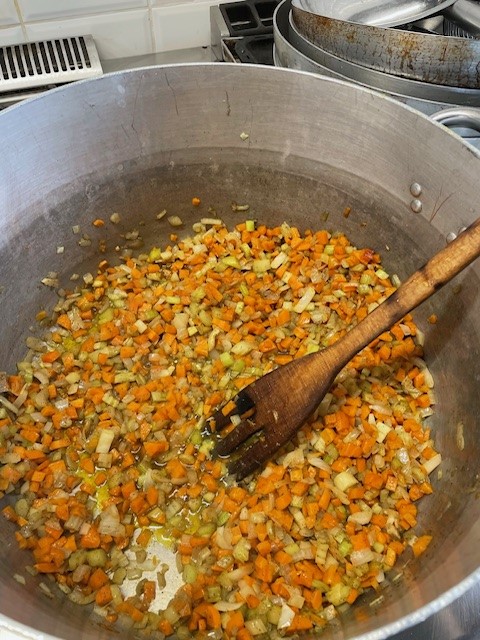
Add the garlic and cook for a minute more, stirring.
Add tomato paste and stir until vegetables are completely covered. Continue stirring until tomato paste begins to caramelize and stick to the bottom of the pan.
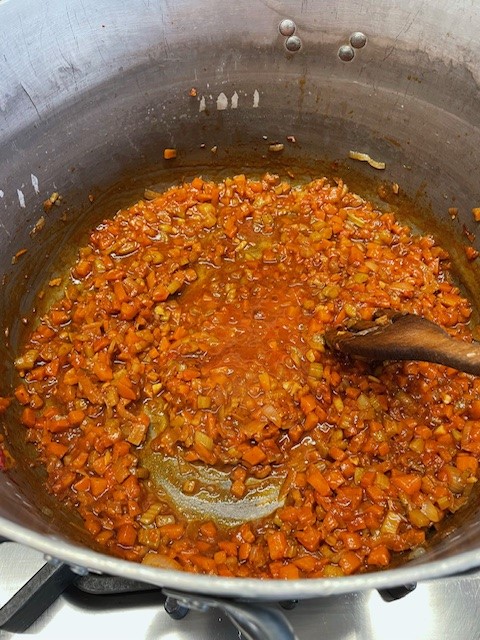
Add white wine to deglaze the pan. Lower heat and simmer.
Add tomato puree and stir until fully mixed.
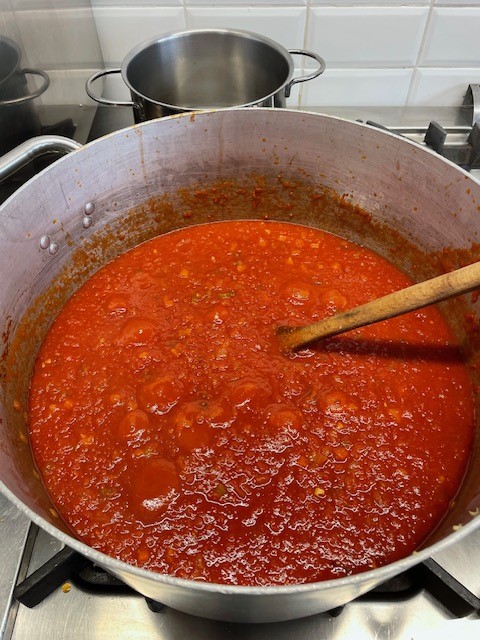
Add salt and pepper. Add pepper flakes to taste. We did not add herbs to our vegetable sauce. The addition of herbs of your choice can be made at this time.
Stir regularly. Simmer over low heat for an hour or until the sauce begins to thicken.
Cook pasta in salted water until al dente.
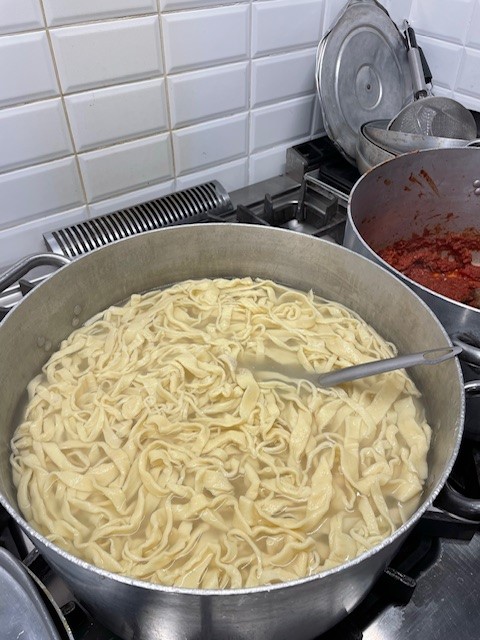
Use pasta fork to ladle pasta directly into sauce. Do not strain or rinse pasta before adding to sauce. The starchy water that accompanies pasta into the sauce will make the sauce creamier. This is the reason homemade pasta is often better than commercial pasta as the rough texture will cause both water and sauce to adhere to the noodles.
Once sauce and pasta are combined serve with grated Parmigiano Reggiano and enjoy!
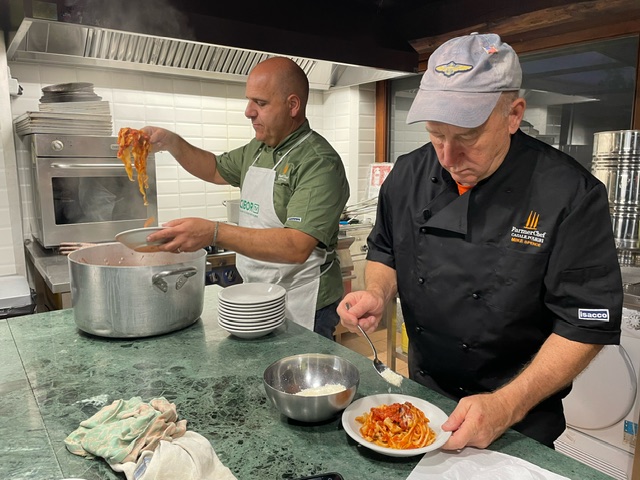
More information about Chef Lorenzo Polegri, his business Casale Polegri, and his farm at Casa Segreta including how to schedule cooking school opportunities and purchase Casa Segreta products including wine, olive oil, and cookbooks can be found at: https://en.casalepolegri.com/
 CMAdventures
Leave a comment